
Policy & News
Heavyweight! mRNA vaccine combination therapy reduces melanoma death risk by 65%!
2023-06-06
Global mRNA technology is mainly used in the field of infectious diseases (~47%), oncology therapeutic field (~30%), protein substitution, and gene therapy (~17%). In the post-pandemic era, with sales of new crown vaccines falling off a cliff, oncology immunotherapy and prophylactic vaccines have become R&D hotspots.
On 5 June, mRNA vaccine giants Moderna and Merck Sharp & Dohme announced at the 2023 ASCO Annual Meeting that a Phase 2b study of the combination of the individualised oncology vaccine mRNA-4157 (V940) with the anti-PD-1 therapy Keytruda has shown that, compared to Keytruda alone, the combination for surgically resected high-risk melanoma (stage III/ IV) reduced the risk of spreading or dying from this skin cancer by 65%.
The mRNA-4157 cancer vaccine contains a single synthetic mRNA molecule encoding up to 34 neoantigens that are algorithmically designed based on the unique DNA sequence mutation profile of each patient's tumour. When this cancer vaccine is injected into the body, the neoantigen sequences carried by these RNAs are translated into proteins and stimulate the generation of T-cell anti-tumour responses through antigen presentation in the body.
The trial, which enrolled 156 people, also follows up on data presented at another cancer conference in April, which previously demonstrated that the combination therapy also reduced the risk of death or recurrence in melanoma patients by 44 per cent compared to Keytruda alone.
These studies suggest that mRNA technology, which emerged during the new crown pandemic, could be used to prepare personalised vaccines that train the immune system to attack specific types of cancer cells in a patient's tumour.
For decades, scientists have pursued the dream of using vaccines to treat cancer with little success. Experts say mRNA vaccines, which can be produced in as little as eight weeks and used in conjunction with drugs that boost the immune system, could lead to a new generation of cancer treatments.
Similar to the side effects associated with Moderna's new crown vaccine, the most common side effects of cancer mRNA vaccination are chills, pain at the injection site and fatigue, which occur in 50 to 60 per cent of participants.
Moderna R&D pipeline (partial)
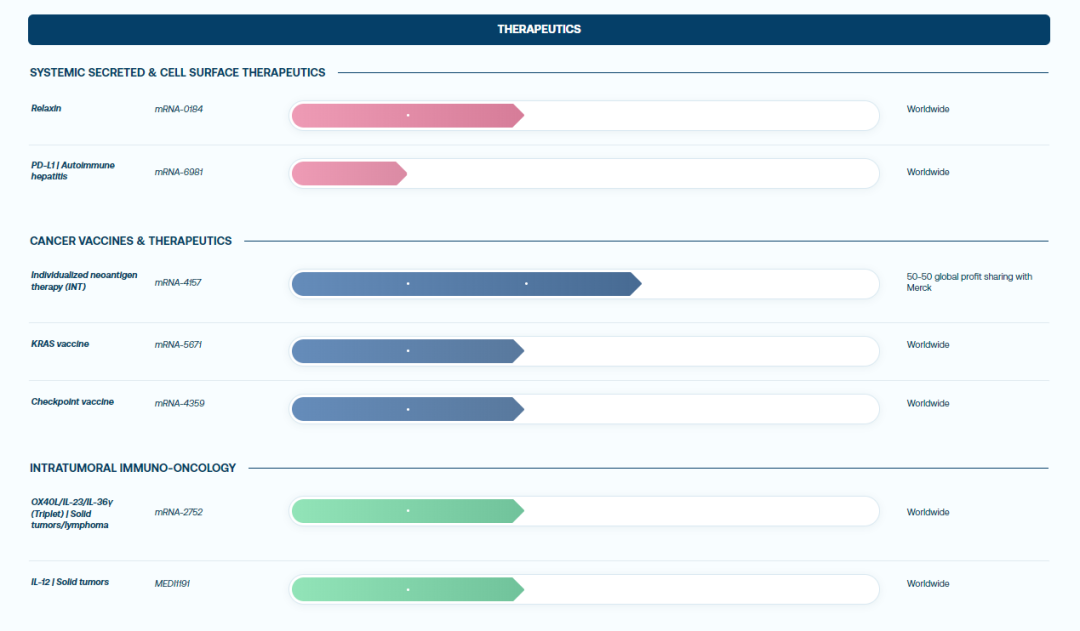
Source: Official website
Merck Sharp & Dohme and Moderna are planning a larger Phase 3 trial in melanoma patients and are also testing the combination therapy in lung cancer.
"This is exciting stuff and it opens the door to our Phase 3 programme, which is due to start at the end of this year," said Eliav Barr, head of global clinical development and chief medical officer at Merck Sharp & Dohme Research Laboratories, "and we think it's not only applicable to melanoma, but to a to a wide range of other cancers."
References:
https://investors.modernatx.com/news/news-details/2023/Moderna-and-Merck-Announce-mRNA-4157-V940-in-Combination-With-KEYTRUDAR-pembrolizumab-Demonstrated-a-Statistically-Significant-and-Clinically-Meaningful-Improvement-in-Distant-Metastasis-Free-Survival-in-Patients-with-High-Risk-Stage-IIIIV-Melanoma-F/default.aspx
Source: Drug Fusion Cloud

Latest News

Promoting Integration with Competitions and Showing Style
The first badminton match of "Kangrun Cup" was successfully held.
Building Elites with Aggressiveness and Winning the Future with Concentration and Effort
Jiangsu Kangrun Biotechnology Co., Ltd. 2023 New Employee Expansion Activities Successfully Conducted
Pre season talk about influenza vaccines: correct cognition without hesitation
Luwang, September 11th (Reporter Guan Xiaohui, Correspondent Li Chengxiu, Ma Jin) Influenza is an acute respiratory infectious disease caused by the influenza virus that poses a threat to human health. It is seasonal (commonly known as the "flu season") and can cause serious complications such as pneumonia, encephalitis, and even death in infants, young children, and the elderly. Therefore, outbreaks of COVID-19 are prone to occur in schools, kindergartens, and elderly care institutions. Although there was a nationwide outbreak of H1N1 influenza A from February to April this year, according to perennial epidemiological data in China, the southern and northern regions generally have a high incidence in winter and spring (November to February of the following year), and the areas south of the Yangtze River can also have a high incidence in summer. Therefore, we are currently in the pre flu season, which is the best time to receive influenza vaccines, especially for infants, young children, primary and secondary school students, the elderly, medical personnel, and entry-exit port staff. However, due to cognitive differences, some parents and vaccination populations have varying degrees of hesitation in vaccination, mostly suspecting the effective protection of the vaccine, followed by anxiety about vaccination safety. For this, let's talk about topics related to influenza vaccines together.


